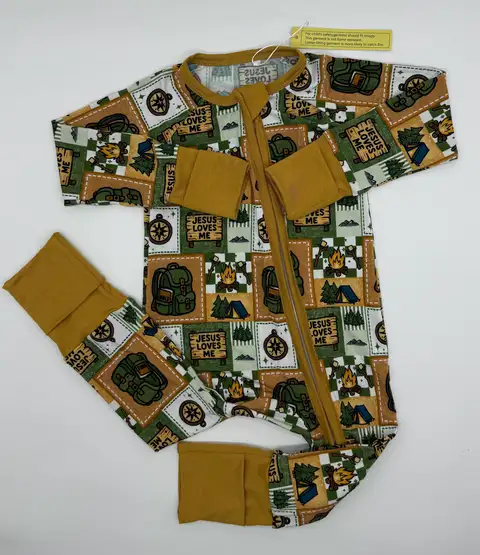
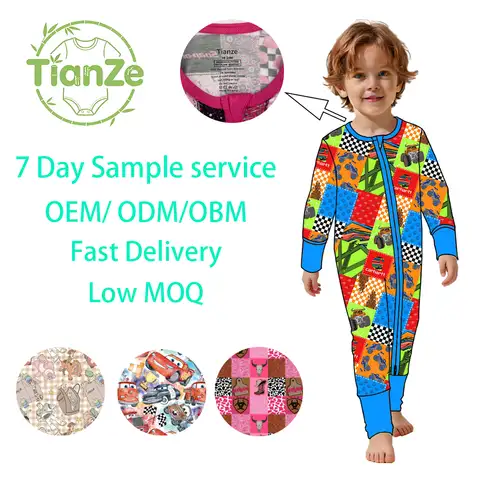
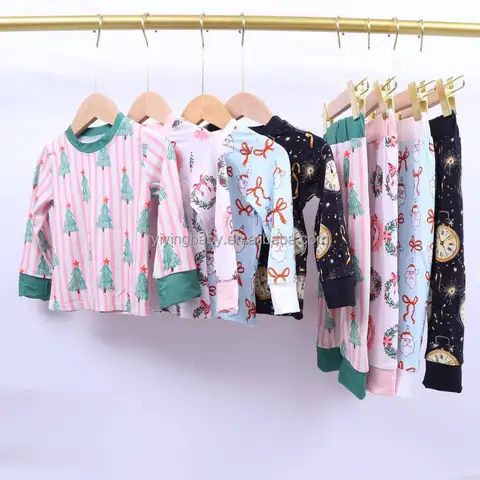
Wholesale Direct OEM Custom Bamboo Newborn Pajamas Supplier Source
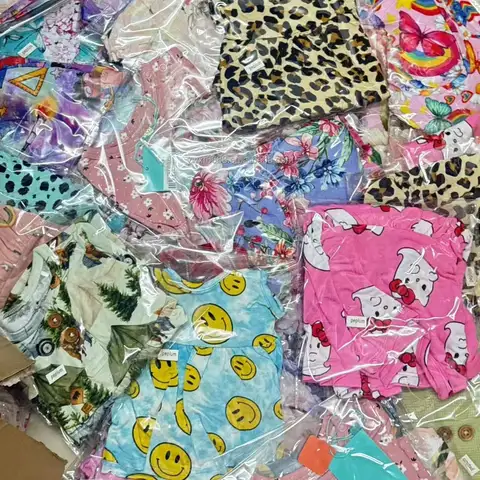
Introduction to Fabric Selection and GSM Standards
Precision in fabric selection sets the tone for the quality of custom Bamboo Newborn Pajamas. Bamboo-derived textiles have a natural softness and hypoallergenic properties that make them appropriate for newborn skin. GSM (grams per square meter) consistency is a critical consideration. Deviations higher than ±5% GSM on bamboo fabric drastically disrupt sewing uniformity, lockstitch tension, and seam reliability.

For custom Bamboo Newborn Pajamas OEM Custom Design, a recommended GSM range is 160-200 for optimal breathability and stretch recovery. A GSM meter should be used batch-by-batch to ensure uniformity, with regular testing at roll receiving, fabric cutting, and pre-production phases.
Lockstitch Tension for Seam Integrity
Maintaining lockstitch precision during high-speed production of custom Bamboo Newborn Pajamas presents challenges. Variable thread tension is a known culprit for seams failing during wear or laundering. For bamboo knit fabrics, a medium-low tension on both upper and bobbin threads prevents puckering while maintaining integrity.
During your OEM scaling phase for custom Bamboo Newborn Pajamas, recalibrate machines in intervals of 2,500 stitched pieces or after significant hardware changes. Always run off-production tests on scrap fabric matched to your SKU specifications. Dual needle lockstitch machines may be required for seam stress zones, such as shoulder attachment and crotch areas.
Seam Strength Optimization
When producing custom Bamboo Newborn Pajamas, seam failure tolerance is non-negotiable. Implement a seam strength KPI (Key Performance Indicator) measured in N/cm (newtons per centimeter). ASTM D1683 standards recommend seam integrity to withstand 14 N/cm for lightweight knits. Double-stitch configurations should be employed along high-stress zones such as cuffs and inseams.
For double-stitched patterns, optimize stitch density (SD) at 12 SPI (stitches per inch) for stretch-heavy areas. Overlocking edges with a four-thread overlocker provides superior durability. Request procurement of high-tensile polyester-core-spun thread, as natural fiber threads introduce breakage risks under laundering stresses associated with bamboo fabric blends.
OEM Custom Design and Lead Time Management
Scaling up production for custom Bamboo Newborn Pajamas OEM Custom Design requires a rigorous demand forecast tied to procurement timelines. For bamboo fabric, consider extended lead times due to specialty sourcing constraints, especially for customized dyeing or GSM adjustments. Build in buffer stock for trims like snaps and zippers, as inconsistent supply halts assembly-line flow.
Consistency across SKUs in terms of pattern grading streamlines production efficiency. Ensure that CAD layouts for all sizes of custom Bamboo Newborn Pajamas comply with cutting markers to maximize fabric yield without risking design mismatches between adjacent sizes.
Thread Quality and Compatibility
Thread compatibility should not be underestimated when manufacturing custom Bamboo Newborn Pajamas. Bamboo fabrics require elastic yet durable thread specifications to accommodate dynamic stretching. Bonded nylon and polyester threads are preferred for their tenacity and abrasion resistance.
For thread numbering, opt for Tex 24 or Tex 27 thread weights compatible with medium-weight bamboo knit. Pre-condition all thread to indoor production climate for at least 24 hours to minimize thread-fray inconsistencies due to environmental shifts. Always align thread selection with needle type, ideally using ballpoint needles to prevent damage to the bamboo fiber structure.
Pattern Grading and Tension Balancing
Ensuring pattern grading consistency while scaling up production for custom Bamboo Newborn Pajamas OEM Custom Design requires preemptive tension reconciliation. Heavier grades in the larger sizes may increase bobbin tension demands. Monitor and adjust both upper tension and bobbin assemblies frequently, especially with size transitions.
Use programmable electronic tension control options on your lockstitch machines if available. Synchronize machine parameters to avoid misalignment across multiple production lines. Carry out fabric recovery tests to eliminate post-sewing warping in intricate-sized sections of custom Bamboo Newborn Pajamas.
SKU Rationalization Best Practices
SKU rationalization is key for profitability when manufacturing custom Bamboo Newborn Pajamas at scale. Offer streamlined options by reducing unnecessary size or color combinations during the OEM design process. This minimizes waste during cutting and facilitates economical batch production.
Data on consumer demand should influence SKU planning for custom Bamboo Newborn Pajamas OEM Custom Design. Create a feedback loop with retailers to understand high-turnover product variants but avoid over-complicating the range of options available. This will reduce the frequency of machinery recalibration and setup downtime.
Trims and Finishing Compliance
Safety compliance for trims used in custom Bamboo Newborn Pajamas remains a top priority. Snaps and zippers must meet CPSC requirements for lead content and tensile strength testing. Perform pull-test validations on a random sample batch basis to ensure snaps withstand up to 25 pounds of pull force without failure.
Bamboo fabric edges require finishing treatments to prevent fraying during wear. Employ silicone-based softeners to enhance fabric performance while maintaining pilling resistance. Trims should integrate seamlessly with final assembly to prevent hardware protrusions that could irritate newborn skin.
Packaging Specifications and Bulk Handling
Packaging guidelines for custom Bamboo Newborn Pajamas focus on minimizing handling damage while meeting eco-packaging standards. Use recycled kraft paper wrapping or compostable poly bags to stay aligned with sustainable production principles. Bulk cartons must have reinforced burst strength ratings to withstand international shipping conditions.
Conduct a final QA check post-packaging to detect any stitching irregularities. Add silica gel pouches to all bulk cartons to preserve fabric texture during long-haul transportation. Print clear SKU labels on each bulk package to decrease room for logistical confusion.
Worker Training and SOP Documentation
Assemble detailed Standard Operating Procedures (SOPs) addressing each stage of the production process for custom Bamboo Newborn Pajamas. Workers should understand corrective actions for tension errors, seam misalignments, and thread malfunctions.
Conduct quarterly machine training sessions to recalibrate staff knowledge on updated equipment for custom Bamboo Newborn Pajamas OEM Custom Design scaling. Measure their adherence to quality benchmarks via KPI tracking to promote accountability across assembly teams.
Heat Variance During the Fabrication Process
Bamboo fibers are sensitive to heat. This introduces a critical control point at the ironing and finishing stage. For custom Bamboo Newborn Pajamas, prohibit pressing temperatures to exceed 120°C. Gradual cooling systems should be integrated into finishing lines to avoid fabric shrinkage anomalies.
Programmable auto-press machinery with RFID integration ensures a consistently low-heat application in mass production settings. This eliminates inconsistencies seen when transitioning to higher production volumes for custom Bamboo Newborn Pajamas OEM Custom Design.
| Quality Audit | BV |
| Base Composition | GOTS Cotton 629nd Gen |
| Standard Manufacturing Range | Grinch Pajamas |
| Lead Time | 25 Days |
| Eco Index | 91% Certified |
| Standard Textile Parameter | Whatnot Ready To Ship Bamboo Pajamas |
In-Process Quality Control (IPQC) Implementation
Inline inspection processes during custom Bamboo Newborn Pajamas production are non-negotiable. Set checkpoints between cutting, stitching, and finishing to isolate potential defects early. Use random sampling at each checkpoint to verify stitch uniformity, seam tension, and trim alignment.
To dial in consistency for custom Bamboo Newborn Pajamas OEM Custom Design, invest in automated fabric inspection systems. For bamboo knits prone to puckers, infrared sensors can detect tension variations in real time. Fine-tune pace and load across your assembly line to prevent bottlenecks during heavier inspection phases.
Cost Control During OEM Scaling
Cost control measures for custom Bamboo Newborn Pajamas production require a systematic evaluation of material, labor, and overhead contributions to final COGS (cost of goods sold). Advances like automated sewing lines can yield savings but require upfront CAPEX investments.
When scaling custom Bamboo Newborn Pajamas OEM Custom Design, analyze machine downtime metrics for bottlenecks and implement shifts to standardize production throughput. Avoid overreliance on unstandardized purchasing practices. Solicit secondary bids on bamboo fabric suppliers to capture lower per-yard costs during high-volume periods.